L&D Webinars
The monthly L&D webinars are led by experts who are handpicked for their experience, expertise & ability to add significant value to our member-coaches. The webinars usually of 90 minutes duration, are co-designed with the chosen webinar leaders, being mindful of:
Relevance - to the learning needs of the chapter members
Application based - leveraging on the expert experience of the chosen webinar leaders – through sharing of case studies, real scenarios, examples, stories and more
Experiential - we strive to enable participants to get hands-on experience during most webinars . When feasible & required, we plan follow-up sessions between the webinar leaders and webinar participants, with the objective of providing participants the space and opportunity to apply learnings from the main webinar and come back to share successes, pitfalls, questions and deepen their learning.


Reciprocal Peer Coaching Program
Program Highlights:
Watch out for our announcements regarding the next edition. If you are an ICF coach who is interested to participate, write to events@icfchennai.com

ICF Chennai Chapter has always held the spirit of learning, dialogue and discovery an integral part of its culture. We have a thriving WhatsApp community of over 200 coaches who engage actively in learning dialogues. Building on it, we launched a virtual learning platform in our WhatsApp group, where every Sunday there would be a new topic for learning. These topics cover a diverse range – coaching competencies, philosophy, ethics, coaching skills, business/coaching practice etc. Learning Sundays Discussions span through the Sunday, a day where most coaches could have mind space for reflection, discussion, debate and learning, with multiple perspectives emerging, thereby creating new learning for all.
Coaches Coffee Connect
Coaches Coffee Connect is a vibrant community space where coaches come together to connect, learn, reflect and support one another. Designed as an informal yet enriching platform, it encourages the exchange of ideas, experiences and diverse perspectives on coaching and beyond. The sessions also provide opportunities for members and Associates to spark meaningful conversations and build lasting professional relationships within the coaching community. We conduct these sessions virtually and in-person on a periodic basis.



If you are a Member or Associate of the Chapter and wish to present at next CCC on a topic that you are passionate about, write to us at membership@icfchennai.com
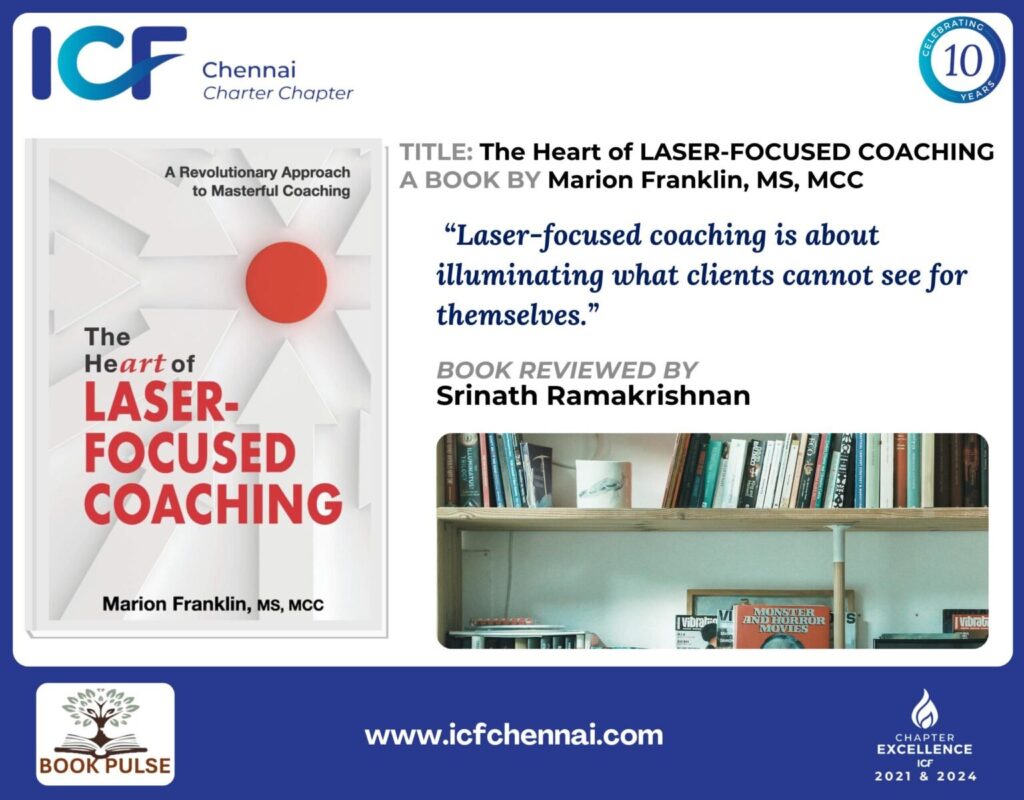
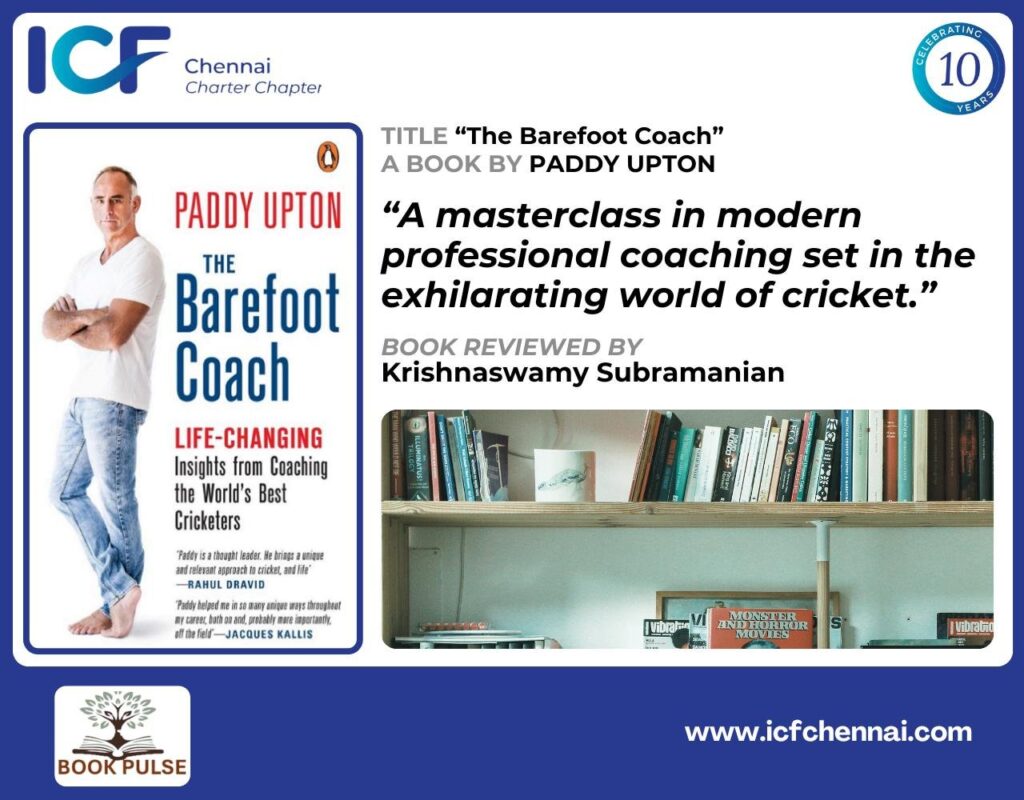
Book Pulse



Coaching Collaboratory



ICF Chennai Charter Chapter collaborates with other chapters, institutions, and coaches in developing evidence based coaching to further coaching profession
We have recently partnered with multiple chapters in India and South East Asia for a unique Research Survey, covering Coaches, Coachees, and Sponsoring organisations.
The initiative in this section explores possibilities to bring out white papers, occasional papers, empirical research, case studies in different areas of Coaching to strengthen the field of coaching and create a research mindset amongst Coaches. For those who are interested in writing and publishing research papers, we have created a structure and guidelines . Click below to access sample papers and the guidelines.





Book Pulse
Who would have thought? Even in the midst of a global crisis, the coaching industry didn’t just survive — it thrived! The 2023 ICF Global Coaching Studyreveals just how resilient and adaptable the industry truly is. Despite the unpredictability brought on by the COVID-19 pandemic, coaching saw unprecedented growth. Here are some highlights:
The “2024 ICF Snapshot Survey: Coaching and Mental Well-Being” studied coaches from various regions, demographics, and specializations. The study explores the strategies coaches employ, the challenges they encounter, and their confidence levels in making a positive impact.
Key findings from the survey include:
The trends illuminated in the study put further focus on the growing demand for professionals qualified to deliver the requested support.
“As more and more people in the workplace seek to prioritize their mental well-being, coaching is a high-demand and proven method to address challenges,” said ICF CEO Magdalena Nowicka Mook. “For coaches eager to meet this need and mitigate the burnout epidemic, ICF’s coaching community, accredited training and credentialing, and resources can equip them to embody the gold standard of the profession.”
Looking forward, mental well-being is an area of coaching that 72% of coach practitioners indicate a desire to expand their capacity to offer. At the same time, coaches are enhancing their awareness of circumstances that require a different type of intervention based on the seriousness of the client’s need. For example, almost half (44%) of coaches referred clients to medical professionals or therapists over the last year.
The study emphasizes the importance of equipping coaches with the right tools, resources, and knowledge to support their clients effectively while knowing when to refer them to mental health professionals.
The “2024 ICF Snapshot Survey: Coaching and Mental Well-Being” is the latest study in ICF’s Global Coaching Snapshots research series, conducted for the organization by PricewaterhouseCoopers. ICF remains committed to empowering coaches globally and promoting the highest standards of practice. This report serves as an important step in identifying key trends and areas for development, ensuring that coaches are prepared to meet the growing demand for mental well-being and other kinds of support in the years ahead.
The 2022 study discovered new growth in generational awareness of coaching, along with increases in coaching participation in emerging regions. Highlights include:
What happened in the Coaching Industry in 2024? This was a question that caught our attention, so I got curious about what 2024 brought to our profession. Intuitively, we know that the world and Coaching has evolved, but I wanted to see the coaching trends were emerging, and think about where they might take us in 2025. Below is what I found.
The Coaching Industry 2024: Deep Dive into Trends, Insights, and the Future!
Looking back at 2024, it’s clear that the coaching industry has entered a new phase of growth, transformation, and innovation. I have seen this maturity emerging over the last decade, but there is something different about 2024. What I think is different, is not so much about us as coaches, our profession, or even coaching itself, rather it’s a maturing in how coaching is viewed as a profession. Let’s explore the eight core trends that I found emerging from 2024 and that are shaping the coaching landscape for 2025.
Globally, the coaching industry is experiencing an unprecedented surge, with market projections reaching $20 billion in 2024, reflecting a steady annual growth. The online coaching segment is expanding rapidly, with forecasts projecting it will grow to $11.7 billion by 2032, at an annual growth rate (CAGR) of 14%. North America remains the largest coaching market, generating over $7.5 billion annually, while Asia-Pacific is emerging as the fastest-growing region, driven by rising corporate adoption and cultural shifts toward personal development. The life coaching market alone is anticipated to reach $6.25 billion in 2024, showcasing the strong demand for personal growth services.
This growth isn’t just statistical; it’s cultural. With coaching no longer seen as a luxury reserved for executives—it’s becoming a mainstream tool for career advancement, leadership growth, and personal transformation. More than this, companies are embedding coaching into their talent development strategies, recognising it as a key driver for innovation, employee retention, and performance improvement.
For coaches, this presents immense opportunities—but also unique challenges. The market is becoming increasingly crowded, with more professionals entering the coaching space each year. Success isn’t just about being a good coach anymore; it’s about being a visible, differentiated, and strategically positioned coach. Coaches who can demonstrate their value, carve out a unique niche, and adapt to evolving client expectations will be the ones who thrive in this booming market.
Key Trends:
Key Takeaway for Coaches:
The rising tide is lifting all boats, but only those with a clear strategy and measurable impact will sail ahead. Focus on clarity of your value proposition, target specific markets, and be ready to adapt to global trends.
If coaching in the early 2000s was defined by face-to-face conversations and intuition, 2024 was defined by data, AI, and digital platforms. AI is not just a coaching trend, it is becoming integral into all areas of our coaching businesses. AI tools are transforming coaching workflows, offering capabilities that go far beyond session scheduling or automated reminders. Today, AI supports personalised client matching, behavioural analytics, and even session content optimisation. Platforms are being developed to track micro-progress in clients, provide actionable insights between sessions, and even suggest next steps based on patterns detected in client behaviour.
The rise of AI-powered coachbots is another fascinating frontier. While they won’t replace human coaches, they’re becoming valuable tools for accountability nudges, pre-session prep, and post-session reflections. It also looks like augmented reality (AR) tools might soon allow clients to engage in immersive coaching experiences, combining virtual environments with real-world scenarios to practice leadership or communication skills in simulated spaces.
But technology isn’t without its challenges. Digital literacy is becoming an essential skill for coaches. The ability to use, understand, and integrate these tools seamlessly into coaching sessions will determine how well coaches can adapt to this new era.
Key Trends:
Key Takeaway for Coaches:
Don’t fear AI—embrace it. Explore platforms that align with your coaching style, use analytics to track progress, and don’t shy away from experimenting with emerging technologies like AR. Technology isn’t going to replace coaching; it’s here to enhance it – but only if we can learn how to collaborate with it.
In a world increasingly shaped by rapid change, uncertainty and burnout, coaching has become not just a tool for professional growth but also a lifeline for emotional resilience and mental well-being. In 2024, the coaching industry witnessed a noticeable shift toward integrating emotional intelligence, stress management, and psychological safety into mainstream coaching practices. For years, we as coaches have been looking to integrate more humanity into organisational leadership, and now companies are recognising the value of our collective humanity!
This isn’t just a response to individual client needs—it’s a reflection of a broader cultural movement. Organisations are beginning to understand the importance of leadership becoming more human centric, and that employee well-being isn’t just a “nice-to-have” but a core driver of productivity, creativity, and retention. Leaders with strong emotional intelligence—those who can manage their own emotions and understand the emotions of others—are shown to create stronger, more cohesive teams. Mental well-being is no longer a fringe benefit of coaching—it’s often the primary goal.
In response, new coaching niches are emerging, including wellness coaching, burnout prevention coaching, and resilience coaching. Integrated coaching models are also gaining traction, blending traditional coaching conversations with creative approaches like outdoor coaching, mindfulness practices, and somatic exercises.
For coaches, this trend is both an opportunity and a responsibility. While we are not therapists, we are often the first point of contact for clients dealing with emotional challenges. The ability to hold space, listen deeply, and guide clients toward emotional clarity and balance is becoming a hallmark of effective coaching.
Key Trends:
Key Takeaway for Coaches:
Emotional intelligence isn’t just something to teach your clients—it’s something to embody yourself. Develop frameworks for resilience, integrate mindfulness practices into your work, and collaborate with mental health professionals when needed.
In 2024, Diversity, Equity, and Inclusion (DEI) coaching emerged as both a critical need and a key opportunity for growth within the industry. As organizations face increasing pressure to foster inclusive environments, DEI coaching has become a strategic tool for driving cultural change and improving team dynamics. However, economic challenges and shifting political climates have led to retrenchments in some DEI initiatives, underscoring the need for measurable outcomes and demonstrated impact.
Neurodivergence-focused coaching also saw significant growth as awareness of conditions like ADHD, autism, and dyslexia increased. Coaches are helping neurodivergent clients navigate executive functioning challenges, time management, and career development, while also empowering them to leverage their unique strengths. This niche has expanded to include not only individual clients but also parents and families seeking guidance to support neurodivergent children.
DEI and neurodivergence-focused coaching present immense opportunities for differentiation in an increasingly crowded market. By adopting holistic, strengths-based approaches and cultivating cultural competence, coaches can deliver meaningful impact while aligning with client needs for inclusion and personalization.
Key Trends:
Key Takeaway for Coaches:
Inclusion and personalization are no longer optional—they are essential. Coaches who prioritize DEI principles and neurodivergent-friendly approaches can not only meet the needs of a diverse client base but also contribute to a more equitable and empowering coaching industry.
The coaching profession is booming like never before. As of 2024, there are 3-4 million people on LinkedIn using Coach in their profile, a dramatic increase that highlights the growing popularity of coaching as a career. However, only 109,200 (~3%) of these coaches hold certifications from recognised bodies like the International Coaching Federation (ICF), underscoring the challenges of a saturated and largely unregulated market. Clients are increasingly prioritising credentialed coaches, with 85% of clients considering certification a key factor in their decision-making. In this crowded landscape, standing out has become a critical challenge for professionals.
With the dramatic increase in the number of practicing coaches worldwide, 2024 saw a maturation of our industry, where being a generalist coach was often no longer enough. The coaching industry is witnessing a profound shift towards specialisation, with niche coaches commanding higher fees and attracting more targeted clients. From AI, resilience, and career coaching to remote work and mental health coaching, niche markets are emerging rapidly.
This trend isn’t random—it’s driven by client expectations. Clients no longer want a one-size-fits-all approach. They are seeking someone who understands their unique challenges, industry, and goals. For example, a senior executive in the tech industry might seek out an AI Leadership Coach, while a corporate team struggling with burnout might look for a Resilience and Mental Health Coach.
The financial incentives for niche coaching are also clear. Specialised coaches often command premium fees, with clients willing to pay more for tailored expertise. Additionally, niche coaching creates a powerful marketing advantage—it’s easier to stand out in a smaller, more focused market than in the vast sea of generalists.
For coaches, the challenge lies in identifying and building your business around the right niche (for you). It’s not about following trends; it’s about aligning expertise, passion, and authenticity with market demand. Coaches who can confidently claim a niche and build authority in it will thrive in this new landscape.
(Author note: Keep in mind that having increased earnings is not just about a niche, it is about professionalising your business, of which a niche is part.)
Key Trends:
Key Takeaway for Coaches:
Find your niche, own it, and market it effectively. Whether it’s AI coaching, mental health, or leadership in tech, specialisation is your opportunity to stand out and build a successful business in 2025.
Coaching is no longer just about transformation – more and more it’s about measurable transformation. In an era where businesses are under immense pressure to justify every dollar spent, ROI (Return on Investment) has become the cornerstone of coaching engagements.
Studies show that coaching delivers an average ROI of 7x the investment, with benefits ranging from improved productivity and leadership effectiveness to increased team engagement and reduced turnover rates. Companies like Intel report annual benefits exceeding $1 billion from their coaching programs.
For coaches, this means two things: first, we need to do more to measure impact effectively, and second, we need to communicate those results clearly to stakeholders. Tools for analytics, pre-and post-assessment surveys, and performance dashboards are becoming essential components of a coach’s toolkit.
Clients, whether individual or corporate, want data-backed proof of progress. Vague and subjective outcomes like “feeling more confident” are being replaced with more metrics like “increased sales performance by 20%” or “reduced team conflict by 30%.”
Key Trends:
Key Takeaway for Coaches:
Measure, measure, measure. Use analytics tools, set clear KPIs with clients, and deliver data-backed results. Clients are investing in outcomes, not just sessions.
The coaching industry has officially embraced the hybrid era, and it’s clear this model is here to stay. While virtual coaching has made significant strides in accessibility and scalability, the value of face-to-face interactions remains unmatched for fostering deeper connections. Hybrid coaching—blending the convenience of virtual sessions with the richness of in-person experiences—has emerged as a gold standard in 2024.
What makes hybrid coaching so effective is its ability to combine the best of both worlds. Virtual coaching enables global reach, allowing clients in New York to seamlessly connect with coaches in London, Singapore, or Sydney without logistical hurdles. However, coaching is not purely transactional—it thrives on relationships. The nuances of human connection, from body language to the energy of being physically present, create moments of profound understanding and trust. Hybrid coaching bridges these two dimensions, offering clients flexibility without sacrificing the depth of the coaching relationship.
Beyond virtual and in-person sessions, hybrid models have also paved the way for innovative coaching formats. Outdoor coaching, nature-based retreats, and experiential workshops are gaining traction as powerful alternatives to traditional approaches. These methods leverage physical movement, creative exploration, and immersive environments to foster emotional and cognitive breakthroughs, enriching the coaching process in ways that are both unique and impactful.
For coaches, the lesson is clear: adaptability and creativity are key to thriving in this landscape. Offering hybrid models that cater to diverse client needs, while exploring innovative formats, positions coaches as forward-thinking and client-centric. Flexibility isn’t just an option—it’s a necessity for staying competitive in a rapidly evolving industry.
Key Trends:
Key Takeaway for Coaches:
Build flexibility into your coaching delivery model. Offer virtual sessions for convenience but create opportunities for in-person engagement or experiential coaching. Experiment with outdoor sessions or blended retreat experiences to stand out.
Corporate coaching has undergone a profound transformation over the past decade. What was once reserved for high-level executives is now permeating every layer of organisations. In 2024, corporate coaching wasn’t a perk—it emerged as a strategic priority.
Businesses are investing heavily in coaching programs as part of their talent retention, leadership development, and employee well-being strategies. Companies recognise that investing in coaching delivers tangible returns—higher productivity, improved communication, reduced turnover, and more resilient teams.
Group coaching has emerged as a particularly cost-effective model. Instead of coaching individuals in isolation, companies are embracing group coaching programs for teams, fostering collective growth, alignment, and accountability. This approach not only reduces costs but also builds shared understanding, common language and team cohesion.
Additionally, employer-sponsored coaching benefits are becoming standard across industries. Coaching isn’t just for top-tier executives anymore—it’s for emerging leaders, team managers, and even entry-level employees looking to fast-track their careers.
For coaches, this represents an enormous opportunity. The demand for corporate coaching services continues to grow, but with it comes a new set of expectations. Companies want to see measurable ROI, structured coaching programs, and long-term impact tracking. Coaches who can deliver scalable, results-oriented programs will find themselves in high demand.
Key Trends:
Key Takeaway for Coaches:
If you haven’t already, develop offerings tailored for corporate clients. Build scalable group coaching frameworks, measure outcomes rigorously, and position yourself as a strategic partner for organisational growth.
After reviewing the coaching trends of 2024, and as I was finalising this article, DDI released their Global Leadership Forecast 2025 which reinforced and focussed much of what we were seeing in 2024. I share this brief summary here because this is not what coaches are saying about our industry, this is what organisations are saying they need from us.
The report highlights a significant decline in trust towards immediate managers, with only 29% of employees expressing confidence in their leaders. This erosion of trust underscores the necessity for coaching interventions that focus on rebuilding leadership credibility and fostering authentic relationships within teams.
As organisations increasingly adopt artificial intelligence, a gap in comfort levels has emerged between senior leaders and frontline managers. Frontline managers are three times more likely to express concerns about AI implementation. Coaching can play a pivotal role in bridging this gap by equipping leaders at all levels with the skills to manage technological transitions effectively and address the apprehensions of their teams.
An alarming 71% of leaders report heightened stress levels, with 40% contemplating exiting their roles due to burnout. This trend indicates a critical need for coaching programs that emphasise stress management, resilience building, and work-life balance to sustain leadership effectiveness and retention.
Despite technological advancements, the report emphasises that the ability to forge genuine human connections remains paramount for successful leadership. Coaching can support leaders in developing emotional intelligence and interpersonal skills essential for building trust and fostering team cohesion. As Coaches, we are often the first exposure to what it means to BE a leader, and so we are perfectly placed to help our clients become more coach-like as leaders.
For coaches, staying future-ready means more than just being tech-savvy—it means being adaptable, compassionate and passionate. The ability to blend human connection with technological efficiency, address emotional well-being alongside professional growth, and measure outcomes while staying creative will define the most successful coaches of the next decade.
Conclusion:
The coaching industry in 2025 is a world of opportunity, but it’s also a world of expectations. Coaches who can balance technology with empathy, data with intuition, and scalability with personalisation will not just survive—they’ll thrive.
I also suggest that you find your tribe, to stay connected to our wonderful profession, and continue to develop and grow in the areas that will make the greatest difference for you and for your business.
So, what’s your coaching game plan for 2025? Let us know in the comments below!
Key Points to Know
Insights and Tips for Coaches
If you enjoyed this article, you may also like:
Selected References
South East Asia has more than 100 ethnic group ..
APA PAPER FORMATTING BASICS*
This is not exhaustive. However, it covers most of the basics of APA structure. May please follow these guidelines.
*Prepared by Baburaj and Renjith for ICF Chennai Charter Chapter (August 2024). Source: https://www.easybib.com/guides/citation-guides/apa-format/